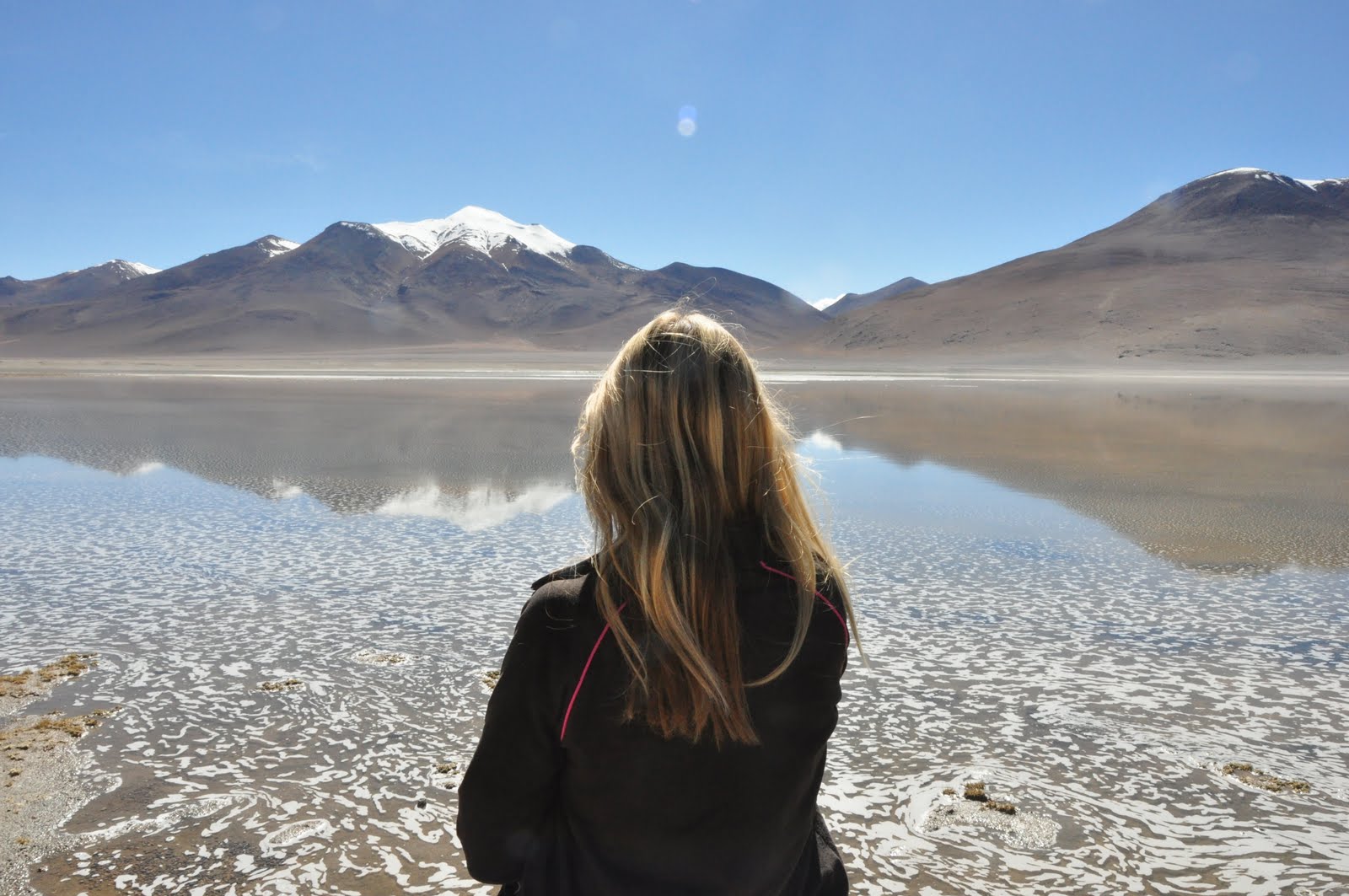
Amazing views of the back of Lucy´s head
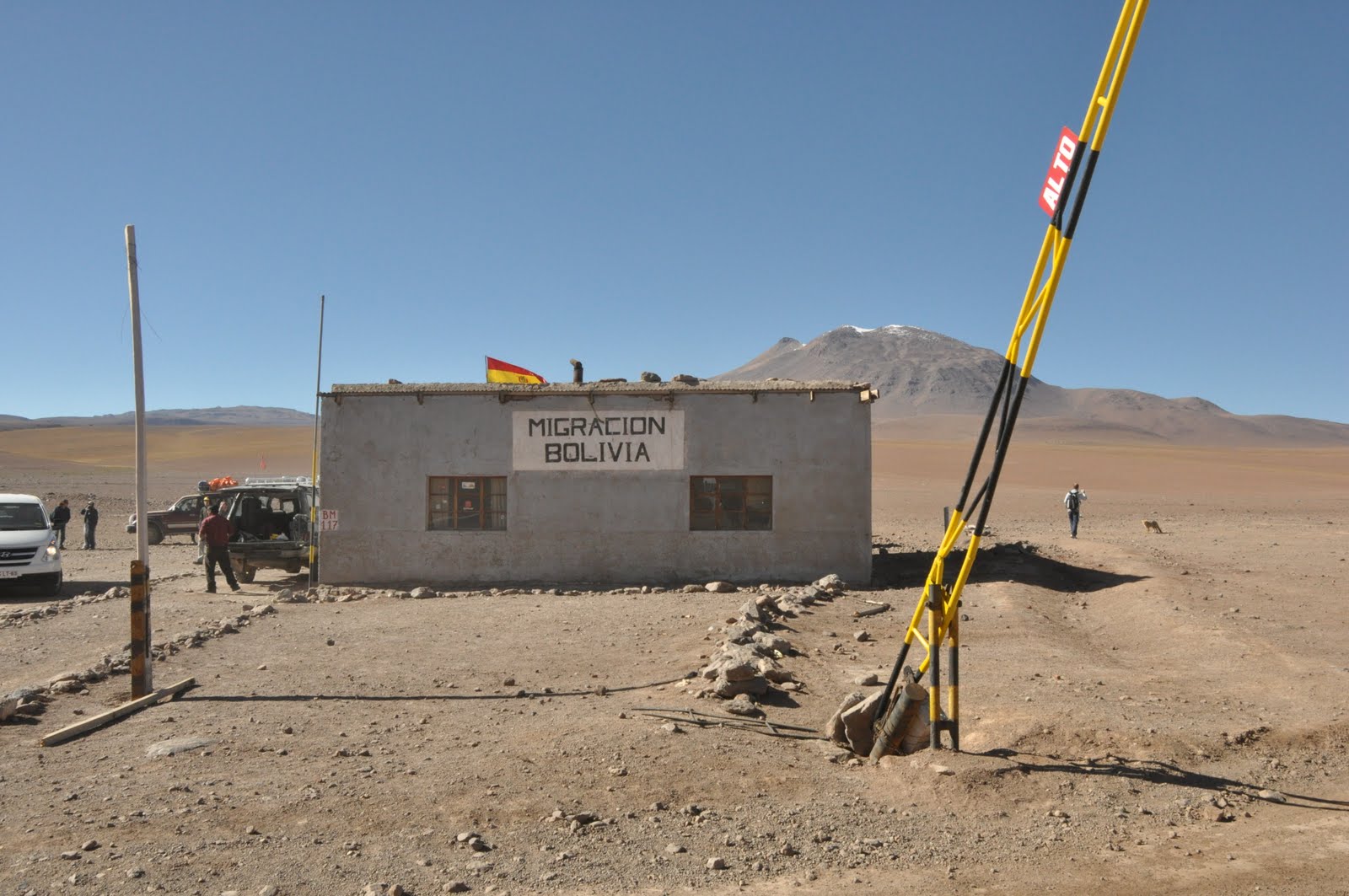
San Pedro de AtacamaWe found out in San Pedro that the easiest way for us to get into Bolivia was to take a three day tour finishing at the salt flats of Uyuni. We booked a tour with an agency (not really finding out a great deal about it) and set off early the next day. The roads to Uyuni are dirt tracks so the only way to get around is by 4 x 4, however before the journey started we had a 2 hour bus journey to the Bolivian border. This was basically a shack in the middle of nowhere with a flag sticking out of it. From here the bus group was split up into jeeps and off we went.

Bolivian border immigration building - an architectural masterpiece
The scenery along the way was absolutely amazing, we were at such high altitude it was like being on top of the world, snow capped mountains surrounded us and the only plants around were small shrubs that can survive with very little water. We stopped at various salt lakes named different colours depending on the minerals in them, steaming hot gysers and hot springs. Our final stop was a lake called Laguna Colorada which has one of the largest flamingo populations in the world. We stayed in a very run down and basic building for the night and had to wear all our clothes in bed to stay warm...hmm maybe we should have found out some more details of the tour beforehand.

Steaming, eggy pools

Beautiful Laguna Colorada

Our driver with lollipop
The next day we set off early as it was a long drive to Uyuni. The landscape changed from desolate mountains and shrubs and became more rocky, we stopped at an area which is known as Salvador Dali due to the very strange and out of place boulders. From here we descended altitude slightly and stopped at another area which had boulders everywhere, it was like something out of the Flintstones. As we were now at a lower altitude there was more plant life and subsequently more people.

Strange rock formations
We stopped at a tiny dusty town for lunch and were mesmerised with the indigenous dress, particularly the women who wore huge skirts and bowler hats. Their hair was long and plaited and joined together at the bottom with fabric. Just before we got to Uyuni we stopped at a train graveyard and then stayed for the night at a local hotel.
The following day we went to the Salar de Uyuni, it is the worlds largest salt flat which sits at a lofty 3653 metres and covers an area of 12106 square kilometres. It is part of a prehistoric salt lake which covered most of southwest Bolivia. Now most of it has dried up apart from a few smaller lakes. It was a strange yet beautiful sight to see, white reflective liquid as far as the eye could see seemed to merge into the sky.

If you wanted pepper, you're well out of luck

Salt crystals